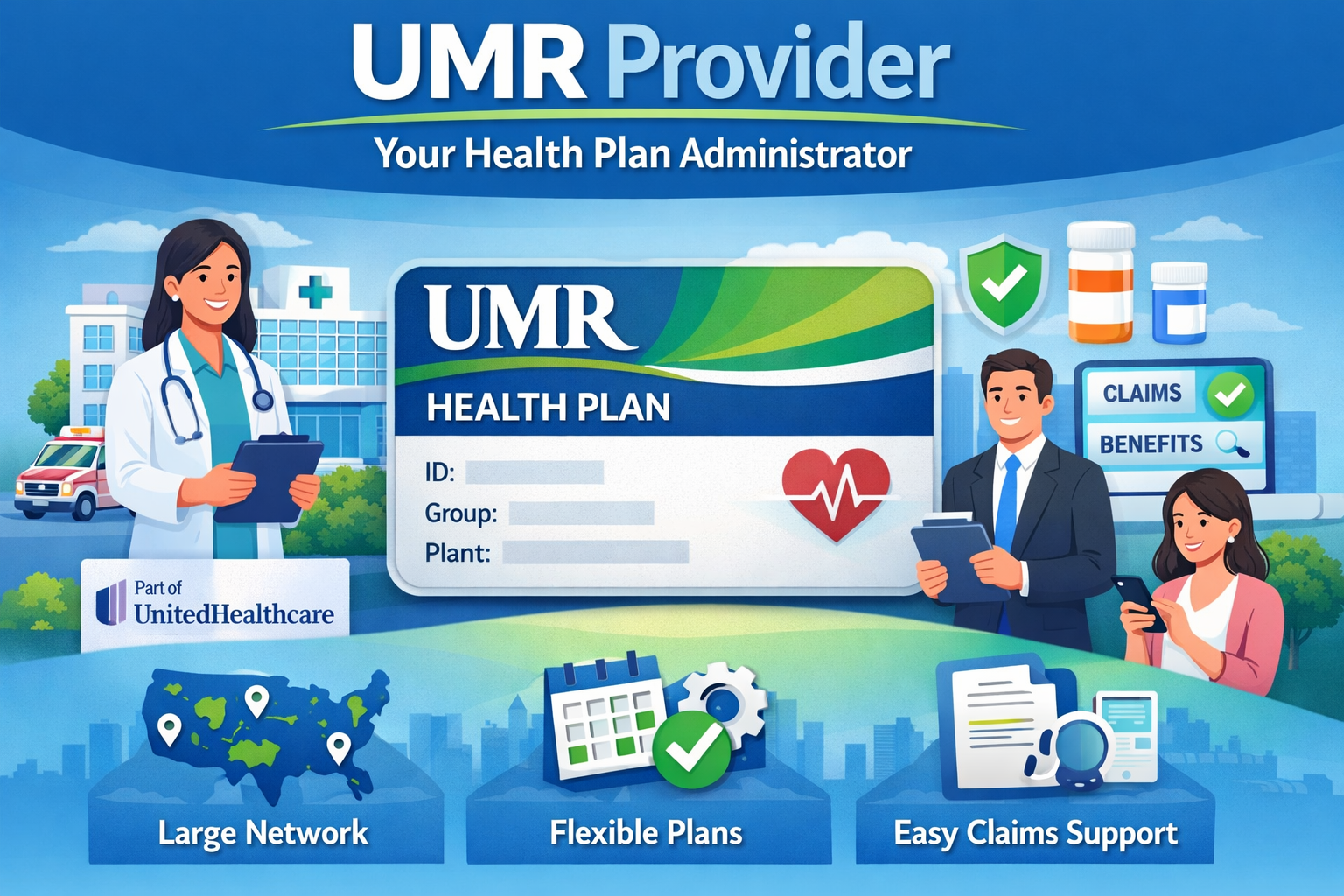
Navigating the health insurance world can feel overwhelming, especially when you come across names that aren’t traditional insurance companies. One such name is UMR provider. If you’ve noticed UMR on your insurance card or through your employer, you might be wondering what it actually is and how it affects your healthcare.
This blog breaks everything down into simple, easy-to-understand sections so you can confidently use your benefits and make informed decisions.
What Is UMR?
UMR is a third-party administrator (TPA). This means it doesn’t provide insurance directly. Instead, it manages health plans on behalf of employers.
UMR is part of UnitedHealthcare, one of the largest healthcare organizations in the world, which allows it to offer access to a broad provider network.
In Simple Terms:
- Your employer funds the health plan
- UMR handles claims, billing, and support
- You receive care through a network of providers
This setup gives employers flexibility while still offering employees reliable healthcare access.
How UMR Works
UMR acts as a bridge between you, your employer, and healthcare providers. Here’s how the process typically works:
- You visit a doctor or hospital within the network
- The provider sends the bill to UMR
- UMR processes the claim based on your plan
- You pay your share (copay, deductible, or coinsurance)
Because UMR is connected to UnitedHealthcare, members often benefit from a large network of doctors and hospitals across the United States.
Key Benefits of UMR Provider Plans
1. Large Provider Network
UMR plans typically use the UnitedHealthcare network, giving you access to thousands of healthcare providers nationwide.
2. Flexible Plan Design
Employers can customize plans to meet the needs of their workforce, making UMR suitable for businesses of all sizes.
3. Cost Control
Self-funded plans managed by UMR help employers control healthcare costs while still offering competitive benefits.
4. Online Tools and Resources
UMR provides a user-friendly portal where you can:
- Check claims
- View benefits
- Track deductibles
- Find in-network doctors
5. Reliable Customer Support
Members can access dedicated support for help with claims, billing, and understanding coverage.
Understanding the UMR Provider Network
The provider network is one of the most important parts of your health plan. UMR networks usually include doctors and hospitals affiliated with UnitedHealthcare.
In-Network vs. Out-of-Network
- In-network providers: Lower costs and better coverage
- Out-of-network providers: Higher costs or limited benefits
To save money, it’s always best to choose in-network providers whenever possible.
Who Uses UMR?
UMR is commonly used by:
- Large corporations
- Mid-sized companies
- Organizations with self-funded health plans
If your employer offers a self-funded plan, there’s a high chance UMR is managing it.
Common Services Covered
While coverage depends on your specific plan, most UMR-managed plans include:
- Doctor visits and hospital care
- Preventive services (checkups and screenings)
- Prescription medications
- Mental health services
- Maternity and pediatric care
Always review your Summary Plan Description (SPD) to understand your exact benefits.
Pros and Cons of UMR Provider Plans
Pros:
- Wide provider network
- Flexible plan options
- Strong administrative support
- Easy online access
Cons:
- Not an insurance provider itself
- Coverage varies by employer
- Requires understanding of self-funded plans
Tips for Using UMR Effectively
To get the most out of your UMR plan:
- Verify providers before scheduling appointments
- Track your deductible through the online portal
- Understand your benefits to avoid unexpected costs
- Keep records of claims and expenses
- Contact support if you have questions
Being proactive can help you save money and avoid confusion.
UMR vs. Traditional Insurance
Unlike traditional insurers, UMR does not take on financial risk.
Instead:
- Employers pay for healthcare costs
- UMR manages administration
- Networks are often provided by UnitedHealthcare
This model allows more customization but requires a better understanding of your plan details.
Is UMR a Good Choice?
UMR can be an excellent option if your employer offers a well-designed plan. It combines flexibility, cost efficiency, and access to a large provider network.
However, since every plan is different, your experience will depend on how your employer structures the benefits.
Frequently Asked Questions (FAQs)
1. Is UMR an insurance provider?
No, UMR is a third-party administrator that manages health plans, not an insurance company.
2. Is UMR part of UnitedHealthcare?
Yes, UMR is a subsidiary of UnitedHealthcare.
3. How do I find a doctor who accepts UMR?
You can use the UMR member portal or search within the UnitedHealthcare network to find in-network providers.
4. Does UMR cover prescriptions?
Most UMR plans include prescription drug coverage, but details vary by employer.
5. What is a self-funded health plan?
A self-funded plan means your employer pays healthcare costs directly, while UMR handles administration.
6. Can I use UMR outside my state?
Yes, if your plan uses the UnitedHealthcare network, you can access providers nationwide.
7. How can I check my claims?
Log in to your UMR member portal to view claims, payments, and deductible status.
8. What should I do if my claim is denied?
Review your Explanation of Benefits (EOB) and contact UMR support for clarification or to file an appeal.
Final Thoughts
Understanding how UMR works can make a big difference in how you use your healthcare benefits. While it may seem complex at first, it essentially acts as a bridge between your employer and healthcare providers.
By learning your plan details, staying within the network, and using available tools, you can maximize your benefits while keeping healthcare costs under control.