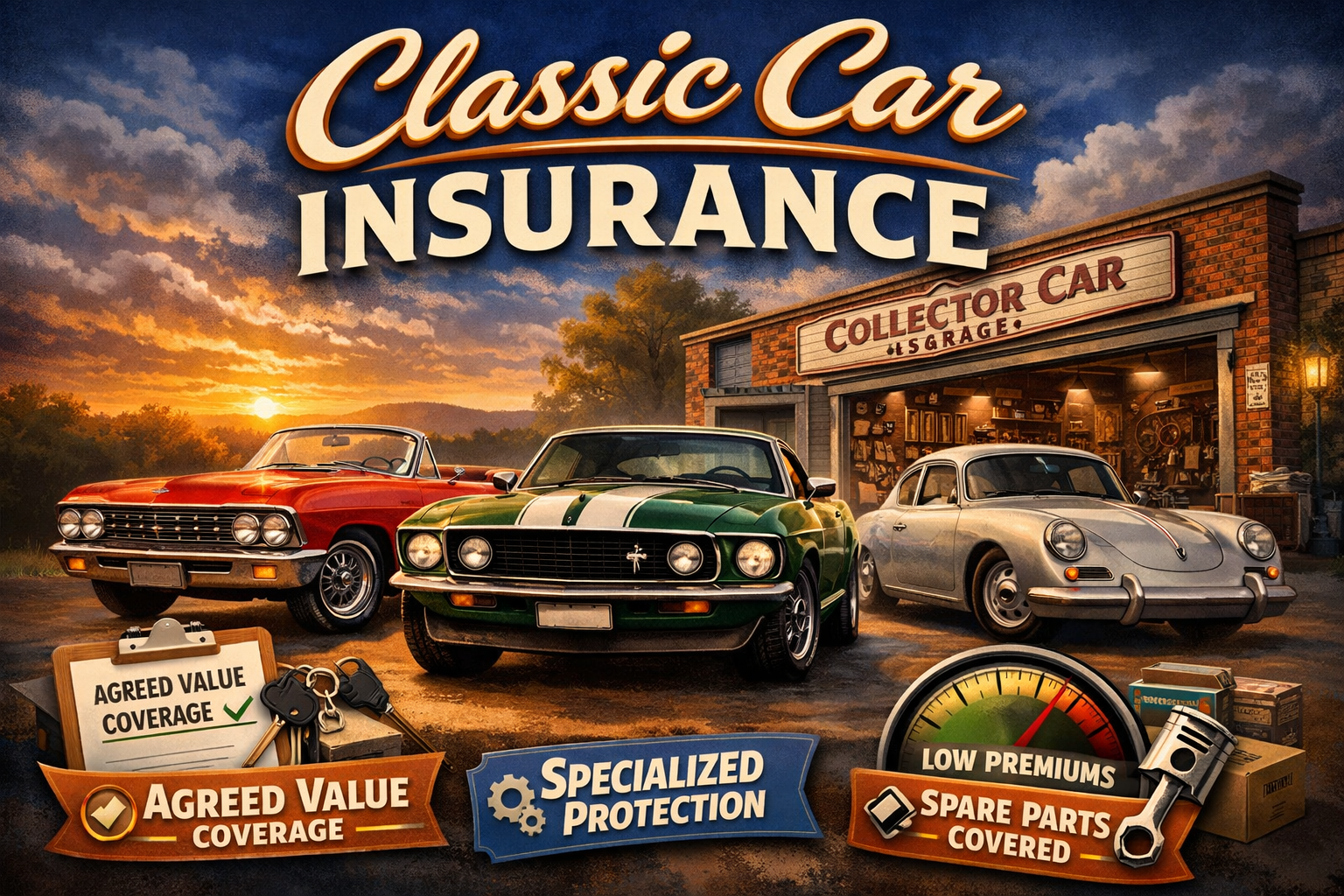
Classic cars are more than just vehicles—they represent history, passion, and valuable investments. Whether you own a vintage Ford Mustang, a restored Chevrolet Bel Air, or a rare European collector car, protecting it with the right insurance is essential. Classic car insurance is designed specifically for older, collectible, or historically significant vehicles and offers protection that standard Auto Insurance policies often cannot provide.
In this blog, we will explain what classic insurance is, how it works, what it covers, and how to choose the best policy for your valuable vehicle.
What Is Classic Car Insurance?
Classic Insurance is a specialized type of insurance created for vintage, antique, and collectible vehicles. Unlike regular car insurance, which usually covers a car based on its depreciated value, car insurance policies typically insure the vehicle based on its agreed value.
This means that when you create the policy, you and the insurance provider agree on the car’s value. If the vehicle is stolen or totaled, the insurer pays the agreed amount rather than the depreciated market value.
Classic car insurance policies usually apply to vehicles that are:
- 20–25 years old or older
- Maintained in good or restored condition
- Driven occasionally instead of daily
- Stored in a secure garage or protected facility
Why Classic Car Insurance Is Different
Classic vehicles need a different type of protection because their value often increases over time rather than decreases. Standard insurance policies may not recognize the collectible value of these vehicles.
Some important differences include:
Agreed Value Coverage
The vehicle is insured for a predetermined value agreed upon by both the owner and the insurance company.
Limited Usage
Since classic vehicles are rarely used for daily transportation, most policies include annual mileage limits.
Specialized Repairs
Coverage may include original parts and repairs performed by professional restoration specialists.
Lower Premiums
Because classic vehicles are driven less often and stored safely, insurance premiums are often lower than regular car insurance.
What Does Classic Car Insurance Cover?
Most car insurance policies offer protection similar to traditional car insurance but include features designed for collectible vehicles.
1. Agreed Value Coverage
Ensures the vehicle is insured for its full collectible value.
2. Collision Coverage
Pays for damage caused by accidents involving other vehicles or objects.
3. Comprehensive Coverage
Protects against non-collision events such as theft, fire, vandalism, or natural disasters.
4. Liability Coverage
Helps cover expenses if you are responsible for injuries or property damage in an accident.
5. Replacement Parts Coverage
Many policies include protection for spare or replacement parts used for maintenance or restoration.
6. Restoration Coverage
Some insurers also protect vehicles while they are undergoing restoration work.
Requirements for Classic Car Insurance
Before issuing a policy, insurance companies often require owners to meet certain conditions.
Common requirements include:
- The vehicle cannot be used as a primary car
- The owner must have another regular-use vehicle
- Drivers should have a good driving record
- Annual mileage limits may apply
- The car must be stored in a secure garage
These requirements help insurers reduce risk and keep premiums affordable.
How to Choose the Right Classic Car Insurance
When selecting an insurance policy for your classic vehicle, consider these factors:
Vehicle Value
Ensure the agreed value reflects the car’s real market worth.
Usage Limits
Check mileage restrictions and allowed uses such as car shows, exhibitions, or weekend driving.
Coverage Options
Choose policies that include restoration protection and spare parts coverage.
Insurer Reputation
Select companies experienced in insuring collectible vehicles.
Premium Costs
Compare quotes from several insurers to find the best coverage at a reasonable price.
Benefits of Classic Car Insurance
Classic insurance offers several advantages for collectors and enthusiasts:
- Protects the true collectible value of the vehicle
- Often more affordable than standard auto insurance
- Provides specialized coverage for restoration and spare parts
- Designed for low-mileage drivers
- Offers peace of mind for valuable investments
Frequently Asked Questions (FAQ)
1. What qualifies as a classic car for insurance?
Most insurers consider a car classic if it is 20–25 years old, well maintained, and primarily used for recreational driving instead of daily commuting.
2. Is classic car insurance cheaper than regular car insurance?
In many cases, yes. Because classic cars are driven less often and stored carefully, insurers often offer lower premiums.
3. Can I drive my classic car every day?
Usually not. Classic car policies generally require limited usage, meaning the vehicle cannot be used for daily commuting.
4. How is the value of a classic car determined?
The insurer and owner agree on a value based on the car’s condition, rarity, restoration work, and market demand.
5. Does classic car insurance cover restoration?
Many insurers provide restoration coverage, which protects the vehicle and its parts during restoration work.
6. Do I need a garage for classic car insurance?
Yes. Most insurance companies require classic vehicles to be stored in a secure garage or enclosed facility.
7. Are spare parts covered under classic car insurance?
Some policies include spare parts coverage, which protects replacement parts used for repairs or restoration.
Final Thoughts
Owning a classic car is both a hobby and a long-term investment. Proper insurance helps protect your vehicle from financial loss while preserving its historical and collectible value. By choosing specialized classic car insurance, collectors can enjoy their vehicles with confidence, knowing they are protected both on and off the road.