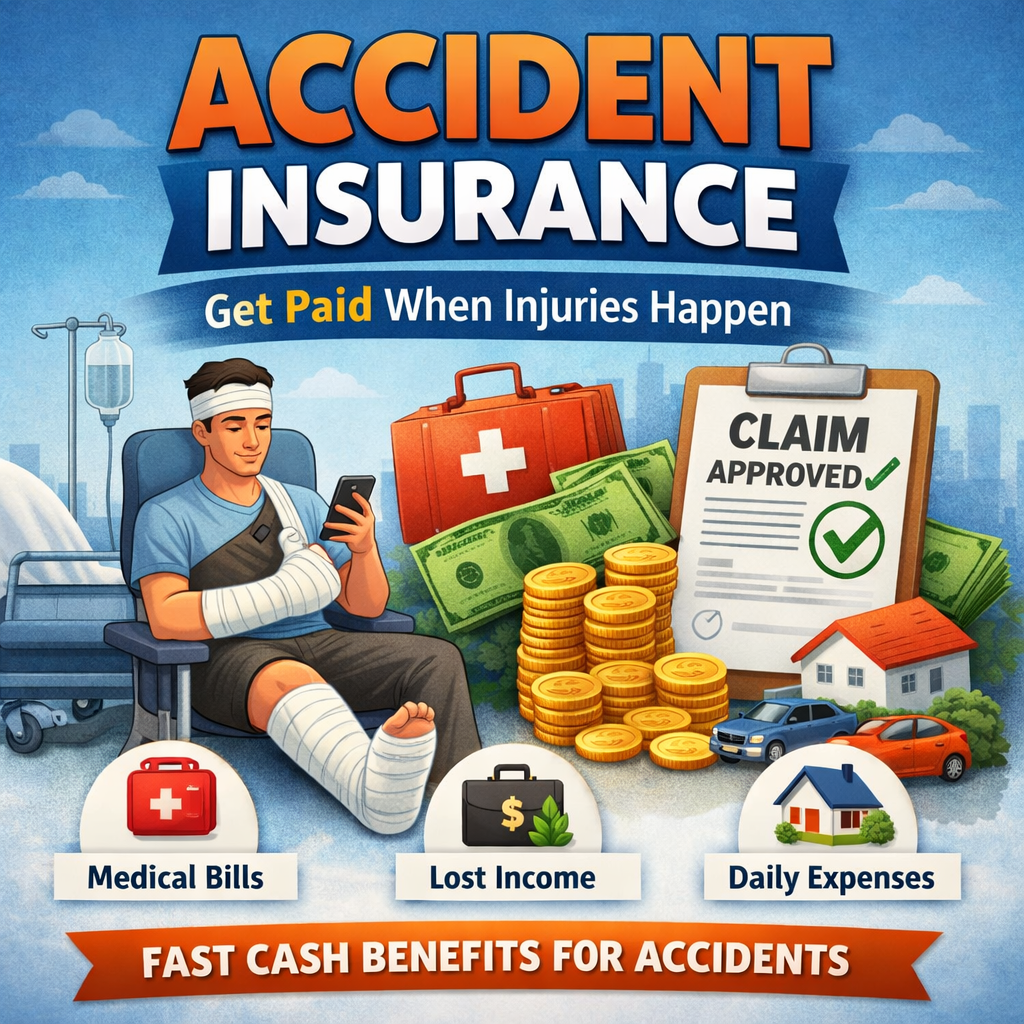
Accidents don’t come with warnings. A simple slip on wet stairs, a car crash during your daily commute, or a weekend sports injury can quickly turn into medical bills, lost income, and unexpected expenses. While health insurance helps with many treatment costs, it doesn’t always cover everything. That’s where accident insurance becomes an important financial safety net.
Accident insurance is designed to provide direct financial support after an accidental injury. Instead of only paying doctors or hospitals, many policies pay cash benefits directly to you. This money can be used for medical bills, rent, groceries, transportation, childcare, or any other recovery-related costs.
In this comprehensive guide, you’ll learn how accident insurance works, what it covers, what it doesn’t cover, who should consider it, and whether it fits into your overall financial protection plan.
What Is Accident Insurance?
Accident insurance is a supplemental policy that pays a fixed benefit if you are injured in a covered accident. The payout amount depends on the type and severity of the injury listed in your policy.
Unlike traditional health insurance, accident insurance does not focus on provider networks, deductibles, or co-pays. Instead, it offers predetermined cash benefits according to a benefit schedule.
For example, a policy may provide:
- A fixed amount for a broken arm
- A daily benefit for hospital stays
- A set payment for emergency room visits
- A lump sum for surgery caused by an accident
The purpose is simple: reduce financial stress while you recover.
How Accident Insurance Works
Understanding how accident insurance works is straightforward.
- You purchase a policy and pay a monthly premium.
- You suffer an accidental injury covered under the policy.
- You file a claim and provide medical documentation.
- The insurer reviews your claim and pays a fixed benefit based on your injury.
The payout usually does not depend on your actual hospital bill. It depends on the injury category defined in your policy.
For instance, if your policy pays $2,000 for a fractured leg, you receive that amount regardless of whether your hospital bill is higher or lower. This gives you flexibility in managing expenses.
What Does Accident Insurance Cover?
Coverage varies by insurer, but most insurance policies include the following benefits:
Emergency Care
- Ambulance services
- Emergency room treatment
- Urgent care visits
Hospital Expenses
- Hospital admission benefits
- Daily hospital stay benefits
- Intensive care unit (ICU) benefits
Injury Benefits
- Fractures
- Dislocations
- Burns
- Concussions
Surgical Benefits
If surgery is required due to an accident, many policies provide a lump-sum payment based on the severity of the procedure.
Accidental Death or Dismemberment
Some insurance policies include benefits for severe permanent injuries or accidental death, offering financial protection for families during difficult times.
What Is Not Covered?
Insurance does not cover every situation. Common exclusions include:
- Illness-related medical conditions
- Pre-existing injuries
- Self-inflicted injuries
- Injuries resulting from illegal activities
- Injuries caused by drug or alcohol misuse
Before purchasing a policy, carefully review exclusions and limitations to avoid surprises later.
Who Should Consider Accident Insurance?
Insurance can benefit many individuals, especially those at higher risk of injury or financial strain.
1. Families With Children
Children are naturally active and adventurous. Sports activities, playground accidents, and school events increase the likelihood of injuries.Insurance can help families manage sudden medical costs and related expenses.
2. Workers in Physically Demanding Jobs
Construction workers, drivers, warehouse employees, and factory workers may face higher injury risks. A workplace accident could mean both medical bills and lost wages.
3. Individuals With High-Deductible Health Plans
If your health insurance has a large deductible, you may need to pay significant out-of-pocket costs before coverage begins. Insurance can help bridge that financial gap.
4. Self-Employed Individuals
If you do not have paid sick leave, a serious injury could temporarily stop your income.Insurance provides financial breathing room during recovery.
Accident Insurance vs. Health Insurance
It is important to understand that accident is not a replacement for health insurance.
Health Insurance
- Covers illnesses and injuries
- Pays doctors and hospitals directly
- Includes deductibles and co-pays
Accident Insurance
- Covers only accidental injuries
- Pays fixed cash benefits
- Supplements existing coverage
Many people combine both policies for more comprehensive protection.
How Much Does Accident Insurance Cost?
Premiums depend on several factors:
- Age
- Occupation
- Coverage amount
- Individual or family policy
- Risk level
In general, insurance is affordable compared to full health coverage. Many policies cost less than common monthly subscriptions, making them accessible for most households.
Key Benefits of Accident Insurance
1. Direct Cash Payments
You receive money directly and can use it however you need. This flexibility is one of the biggest advantages.
2. Affordable Premiums
Insurance is typically budget-friendly.
3. Fast Claims Processing
Many insurers process claims quickly once proper documentation is submitted.
4. Extra Financial Protection
It helps cover deductibles, co-insurance, transportation costs, and lost income during recovery.
How to Choose the Right Accident Insurance Policy
When comparing insurance policies, focus on:
- Benefit schedule details
- Coverage limits
- Waiting periods
- Policy exclusions
- Claim process
- Customer satisfaction
Choose a policy with clear, simple terms and transparent conditions. Avoid overly complicated contracts with hidden restrictions.
Common Mistakes to Avoid
Many buyers make avoidable errors when choosing accident insurance. Watch out for:
- Purchasing without reviewing exclusions
- Assuming it replaces health insurance
- Ignoring benefit limits
- Selecting the cheapest plan without checking coverage details
Insurance should strengthen your financial strategy, not create confusion.
Is Accident Insurance Worth It?
If a serious injury would strain your savings or force you into debt, insurance may be worth considering.
Even a short hospital stay can lead to:
- Lost wages
- Transportation expenses
- Childcare costs
- Medical deductibles
A well-chosen policy ensures you are not relying on credit cards or loans while recovering from an injury.
Frequently Asked Questions (FAQ)
1. What is accident insurance?
Insurance is a supplemental policy that pays cash benefits if you are injured in a covered accident.
2. Does insurance cover illnesses?
No. It only covers injuries caused by accidents, not illnesses.
3. Can I use the payout for non-medical expenses?
Yes. Most policies pay you directly, and you can use the funds for rent, groceries, or other personal expenses.
4. Is insurance required by law?
No.Insurance is optional coverage.
5. How quickly are claims paid?
Processing times vary by insurer, but many claims are paid within a few weeks after submitting required documents.
6. Can I have both health insurance and accident insurance?
Yes.Insurance is designed to supplement health coverage.
7. Does insurance cover sports injuries?
Many policies cover sports-related injuries, although high-risk activities may be excluded.
8. Is accident insurance expensive?
It is generally affordable compared to other types of insurance.
9. What happens if I never file a claim?
If no covered accident occurs, no payout is made, which is standard for insurance policies.
10. Is accident insurance good for families?
Yes. Families with active children often benefit from the added financial protection.
Final Thoughts
Accident insurance provides a practical layer of financial security during unexpected events. While no one plans to get injured, preparation can significantly reduce financial stress during recovery.
With affordable premiums and straightforward payouts, insurance protects your savings, income, and peace of mind. Before purchasing a policy, compare plans carefully and choose coverage that aligns with your lifestyle and financial goals.
A small monthly premium today could prevent significant financial pressure tomorrow.